



Why Gardeners Reach for Terracotta
Terracotta is fired clay, and unglazed clay is porous, meaning the wall is full of tiny openings that let air and moisture pass through. Water moves out of the growing medium instead of pooling, air reaches the root zone, and roots are less likely to sit wet long enough to rot.
The honest tradeoff is that terracotta pots dry out faster than plastic or glazed ceramic. Breathable cuts both ways, and outdoors in summer an unglazed pot can need water daily.
That tradeoff is what our grow kits are built around. Each planter keeps the unglazed clay finish outside and adds a water-tight glazed interior, so the vessel holds a small reservoir instead of losing it.
Small and Mini Terracotta Pots for Windowsills, Desks and Shelves
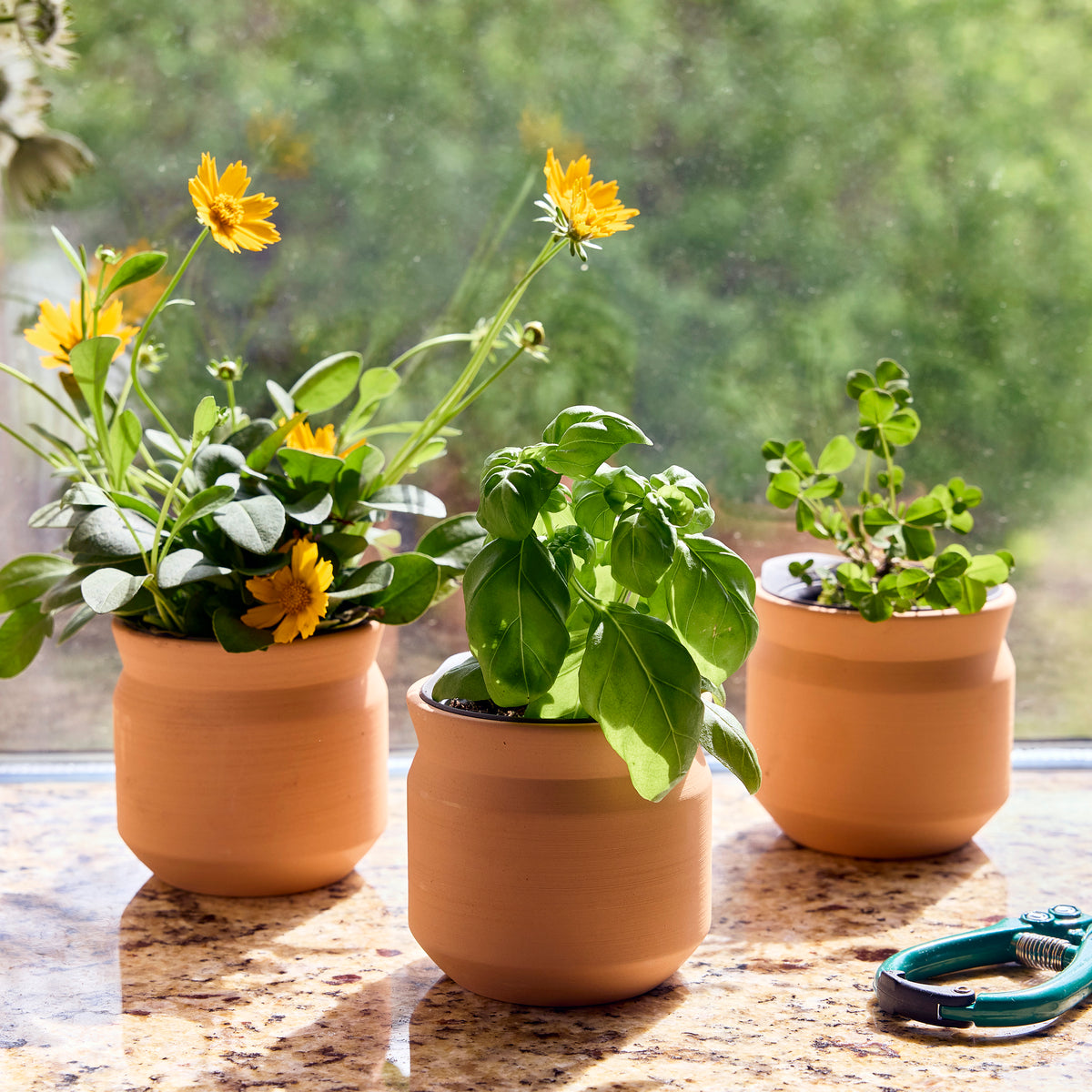
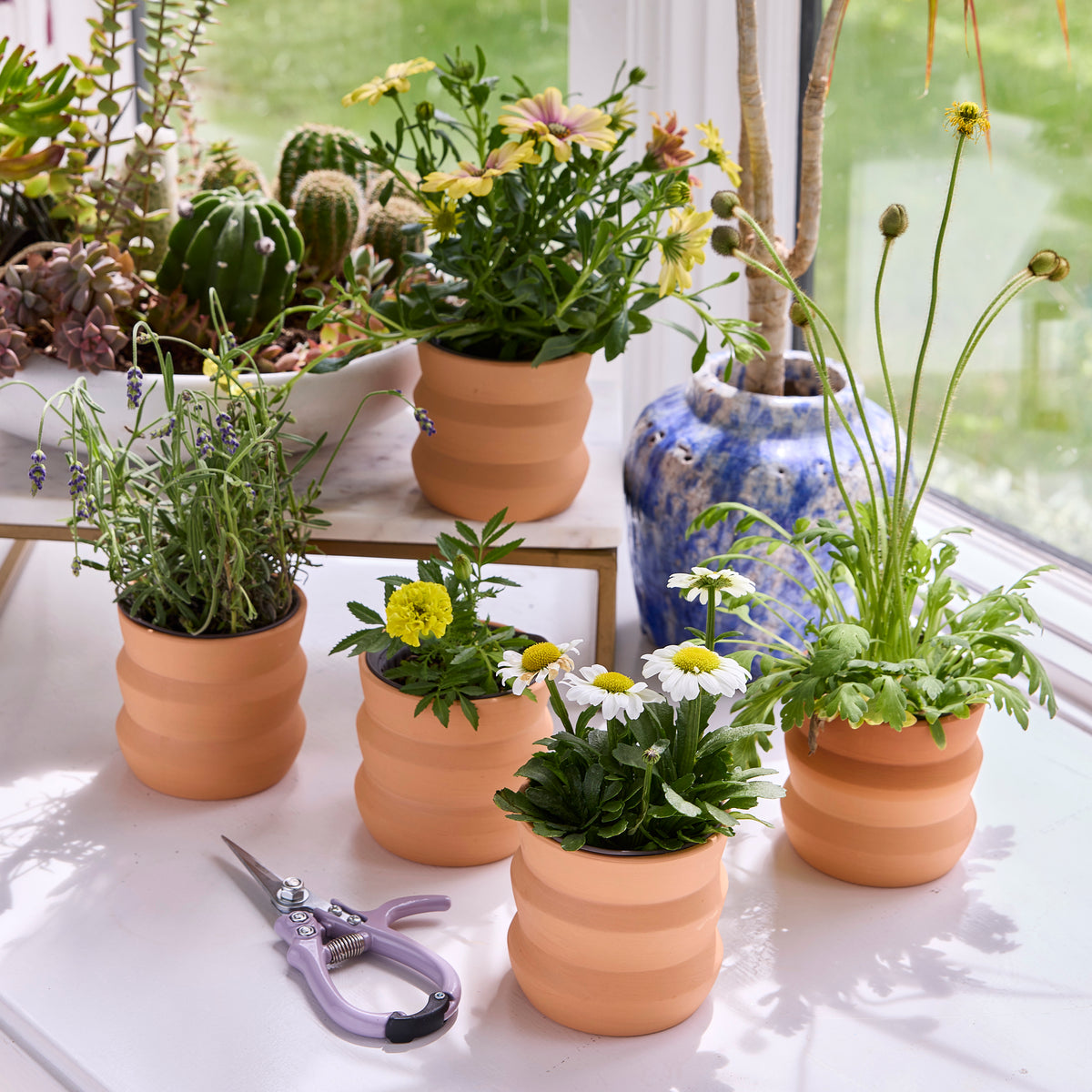
Most of this collection sits in the small terracotta pots range, roughly 3.5 inches square, the size that tucks into the gap where a book used to be.
Mini terracotta pots also fit the light you actually have, since the brightest spot in most homes is a windowsill rather than a floor. Light is what new growers most often underestimate, so it's worth reading how much light indoor plants need.
Terracotta Grow Kits That Arrive Ready to Grow
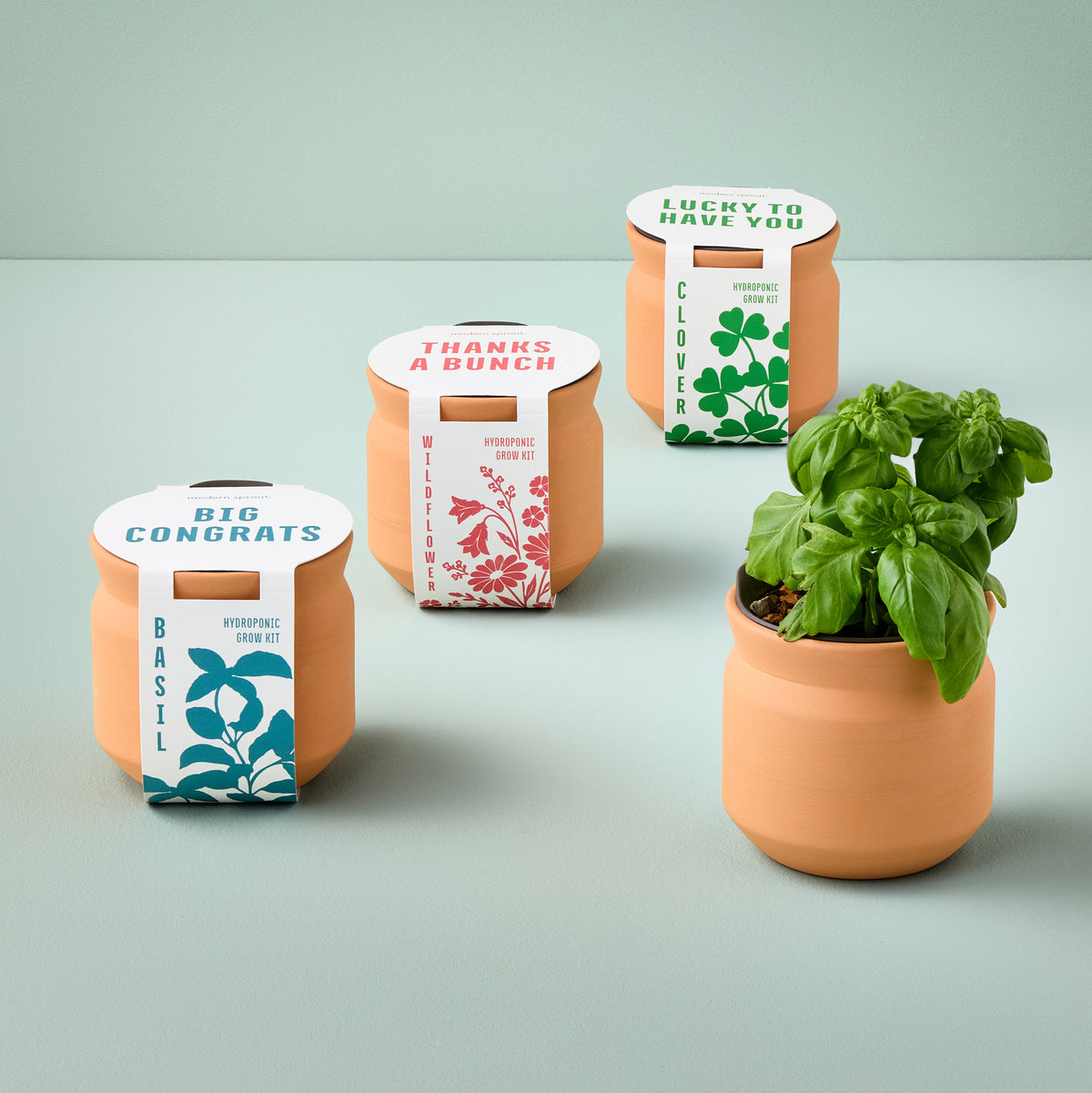
This is where these differ from empty clay planters: most come as a complete kit, so the seed, growing medium and nutrients are all in the box.
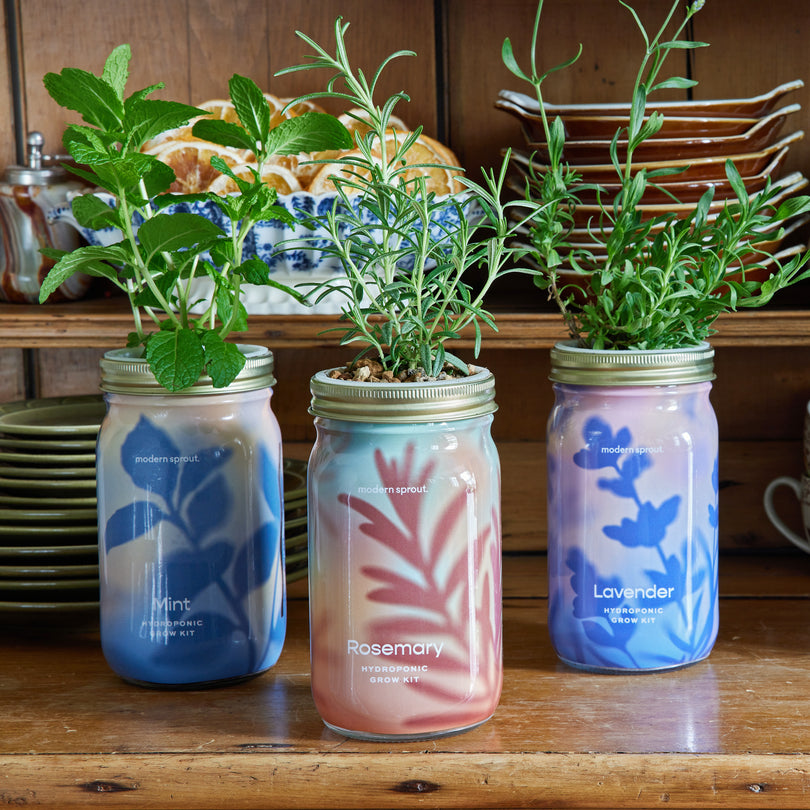
The newer kits use an immersion hydroponic setup. Hydroponic means growing without soil: the seed starts in a growing medium held in a net pot, and water and nutrients reach the roots directly from the reservoir below. Fill it, set the planter in a sunny window, and top up as the level drops.
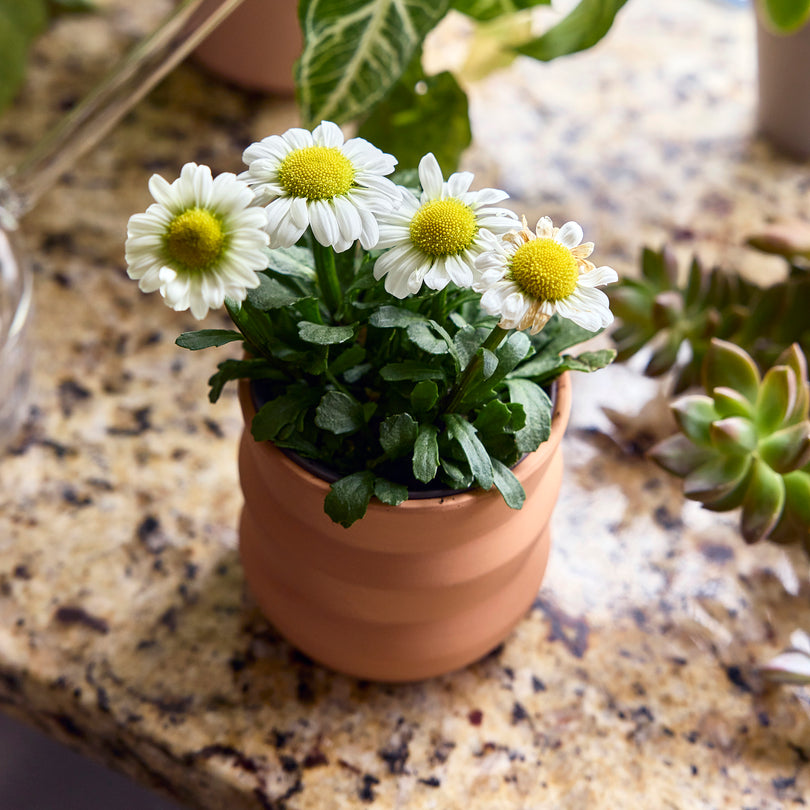
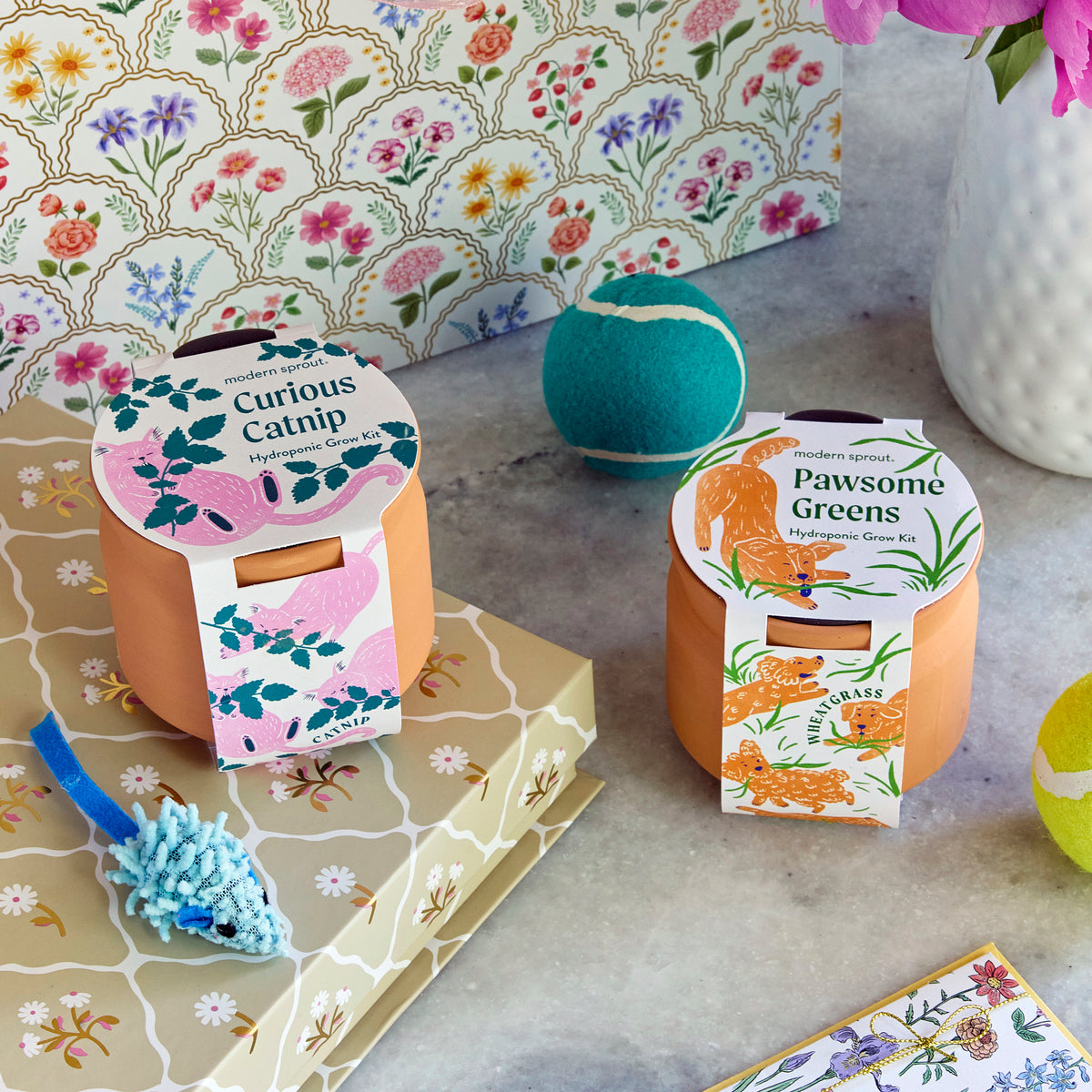
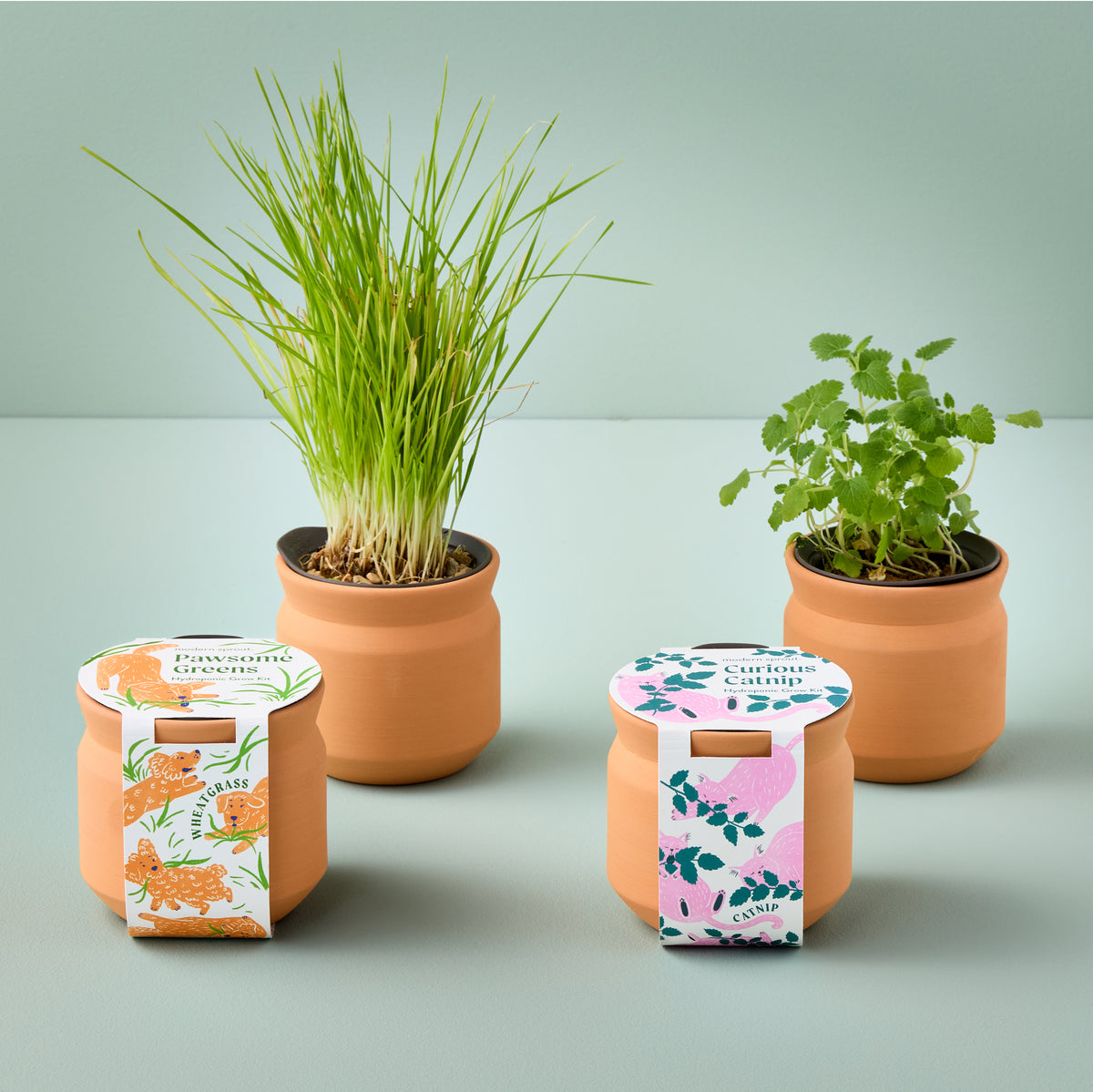
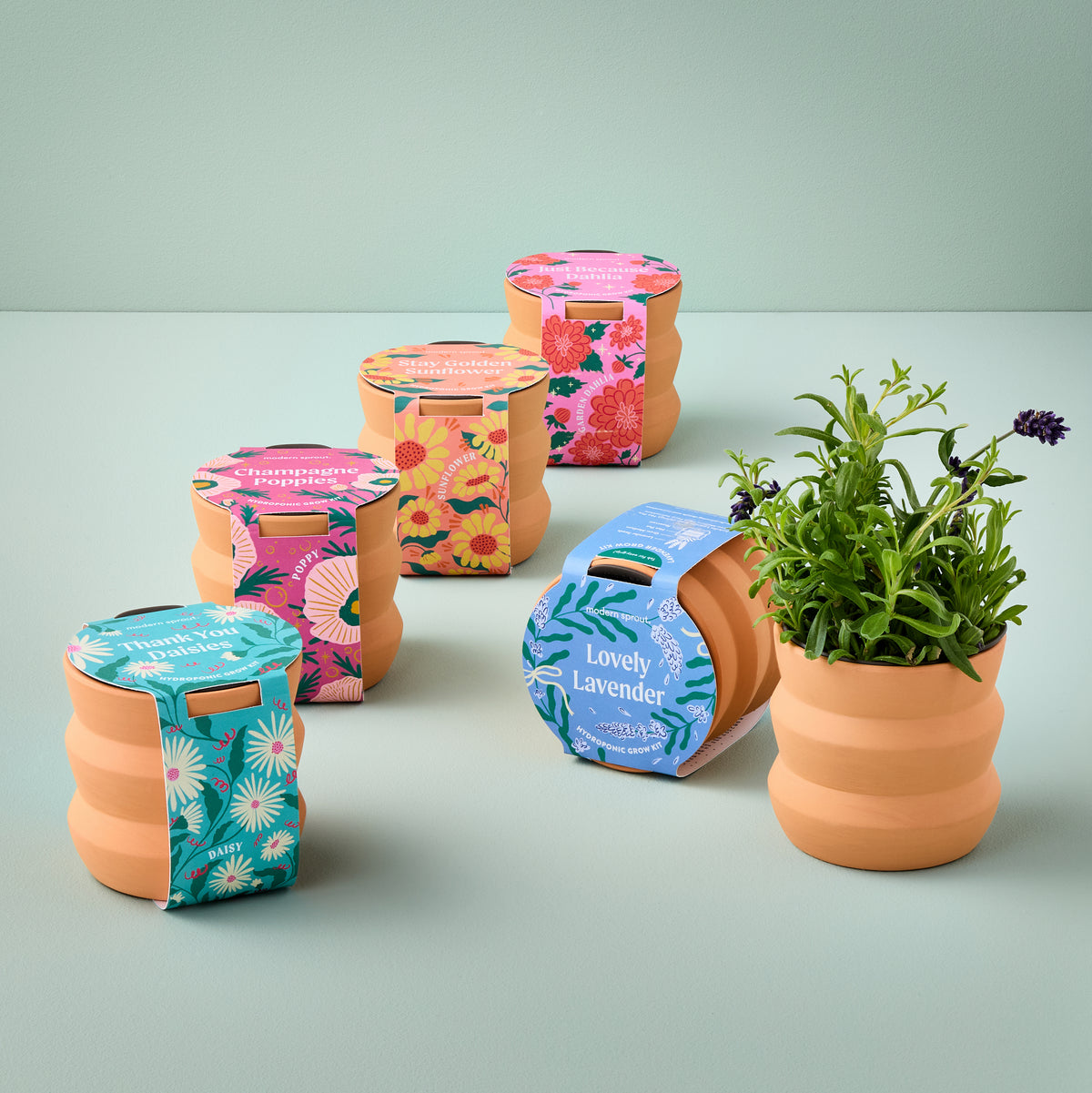
What grows depends on the kit. Tiny Terracotta Grow Kits produce daisy, lavender, poppy, sunflower and zinnia dahlia, and the relaunched version runs the same immersion setup as the full-size planters. Modern Terracotta Grow Kits grow desert plants, prickly pear cactus, aloe and bonsai, in three vessel shapes made as a set, which makes them the pick if you came looking for terracotta pots for succulents. The pet kits grow catnip or wheatgrass for cats and dogs.
Tiny Terracotta Garden Kits run the same setup and grow cherry tomato, baby watermelon and sweet yellow pepper, sprouting in five to ten days. These are the ones worth moving outdoors once established, since a 3.5 inch planter will not carry a tomato to harvest.
For kit styles in other vessels, browse grow kits.
Terracotta Beyond the Planter
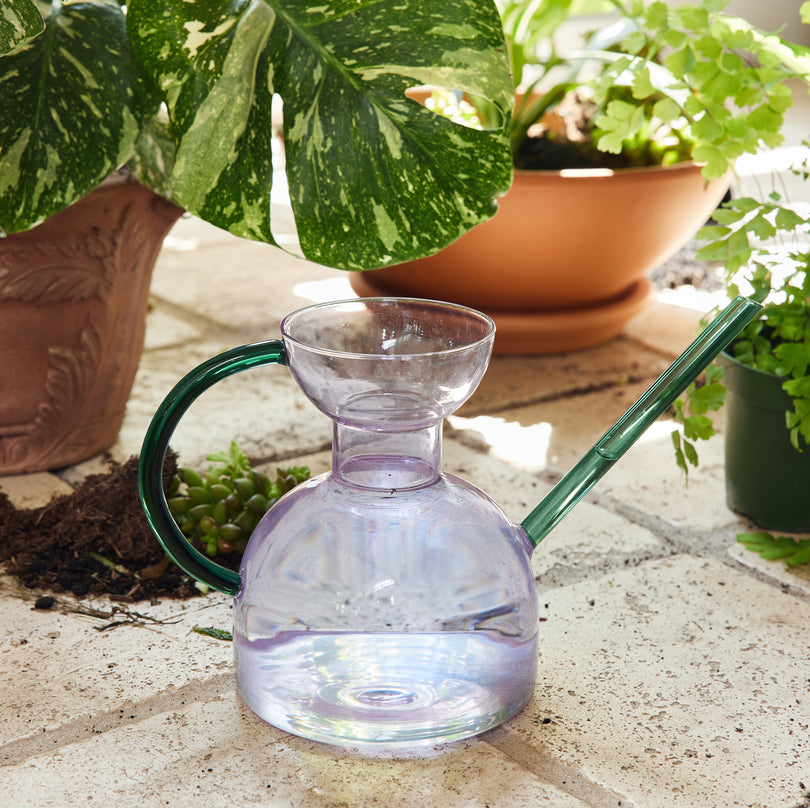
Clay earns a place in plant care beyond the pot. Our Terracotta Watering Bulbs are glazed terracotta topped with cork, drawing on ancient irrigation methods to release water slowly as the plant calls for it. Bury the stake, fill the 10-ounce reservoir, and a small plant stays hydrated about seven days.
Caring for Terracotta
That chalky white film on an older terra cotta pot is efflorescence, mineral salts from water and fertilizer that travel through the clay and dry on the surface. It's harmless, and many growers like the patina it builds. To clean terracotta pots, soak them in one part white vinegar to three parts water for half an hour, scrub with a stiff brush, then rinse and dry before planting.
Sealing is a judgment call. Sealing the inside of a plain unglazed pot slows water loss, which helps outdoors in summer heat, but it strips out the breathability that made clay worth choosing. Seal the outside to protect a finish and leave the interior alone. Our kits sidestep it, since the glazed interior is already water-tight.
Porous clay absorbs water, and absorbed water expands when it freezes, which cracks pots left outside. Bring small pots in before the first hard freeze, or empty and dry them first.
Terracotta Planter FAQs
Are terracotta pots better for plants?
For most houseplants, yes, with one caveat. Unglazed clay is breathable, moving water and air through the wall, which makes it much harder for overwatering to do real damage. That suits succulents, cacti and anyone heavy-handed with the watering can. Plants wanting steady moisture need closer attention.
What plants shouldn't go in terracotta pots?
Moisture-lovers are the ones to think twice about. Ferns, calathea and other humidity-seekers dry out quickly in unglazed clay and need watering more often than most people keep up with. Large plants are awkward too, since clay weighs more than plastic and cracks if it tips.
Do terracotta pots need drainage holes?
A plain terracotta pot filled with potting mix does, since standing water is where root rot starts. Our grow kits handle it differently: the glazed interior holds a deliberate reservoir, and the roots sit above it in a net pot or coconut husk liner, so the water level stays visible and controllable.
Do I need to soak a terracotta pot before planting?
Soaking a new or bone-dry unglazed pot for ten to twenty minutes helps, since dry clay otherwise pulls moisture out of fresh potting mix and away from the roots. Skip it for pots with a glazed interior, including our grow kits.
What's the difference between terracotta and ceramic pots?
Terracotta is a ceramic, specifically unglazed fired clay left porous and orange. What most people call a ceramic pot is glazed and sealed, so it holds moisture longer and comes in any color. Pick terracotta for breathability and the earthy look, glazed ceramic for thirsty plants.